Publish date:
March 4, 2026
Appears in:



Radu Scarlat, Chairman of the Board of Directors of Bento (stock symbol BENTO, listed on the Bucharest Stock Exchange), was a guest on the Feel the Market show, where he discussed the financial results of 2025, the significant contract in the energy sector, the pipeline of projects for 2026 and the growth strategy through internationalisation and proprietary products.
The 2025 financial year brought revenue of approximately 46.6 million lei and a net profit of 6.4 million lei. Scarlat explained that the main factor that affected the results was a general slowdown of the market, felt especially in the first half of the year, when clients postponed signing contracts – a phenomenon he attributes to the political context of that period.
An essential aspect: the major contract signed at the end of 2025 did not generate any revenue in the past financial year. Although the work was carried out, the company did not invoice and did not recognise revenue from that contract, which means that the entire revenue potential is transferred to 2026 and the following years. The results fell within the range estimated in the revised budget, even slightly above the pessimistic scenario, which assumed that nothing from the new contract would be executed.
Scarlat stressed that operational efficiency is difficult to calculate in Bento's case because of the business model based on proprietary software products. For licences, the company invests in development and then amortises the costs according to accounting rules – in practice, a single product can generate an unlimited number of licences, which makes the margin on licences hard to quantify.
The cost of goods decreased in 2025, as a result of a smaller volume of contracts in which Bento resells third-party products (hardware or software from other suppliers), which also have a lower margin compared to its own services. The main expenses remain those with personnel – both employees and collaborators – followed by classic operating expenses (rents, marketing, etc.).
Although 2025 was a year with lower revenue, Bento did not reduce investments in its own products. The company maintained the pace of investment set at the beginning of the year, convinced of the long-term strategy of developing software products and marketing them on international markets.
Scarlat characterised the year 2025 as follows:
"It was a year in which we continued the investments. The only hiccup was that the signing of some contracts was postponed."
Bento's core activity is increasingly focused on the development of proprietary software, which brings a higher margin, being produced in-house and scalable. The share of proprietary products in sales grew in 2025 and the trend will continue in 2026 and the following years, according to Scarlat's statements.
The company is considering introducing in future reports a separate breakdown of revenue – direct and indirect – from proprietary products versus other sources, which would offer investors greater transparency on the quality of revenue.
Asked about the licensing model, Scarlat specified that, although the company also sells perpetual licences, any client who continues to use the product pays a monthly subscription for support services. Thus, practically all licences have an associated recurring-revenue component, regardless of the initial contractual form.
The significant contract in the energy sector – signed within a broader consortium – will generate an important part of turnover for 2026. Scarlat mentioned that over 50% of the contract's value could be invoiced this year, without being able to specify an exact figure.
In addition to the energy contract, Bento's pipeline for 2026 includes several relevant opportunities. In the area of public procurement, there are two or three procedures in advanced stages, and in the private sector, negotiations are at an advanced stage for a contract of a size comparable to the one signed at the end of 2025. The latter has an important strategic component: Bento would use its own Field Service Management and Stock Management products for IT services at petrol station chains.
Regarding a possible contract with Nuclearelectrica, Scarlat confirmed that there was a market consultation procedure, most likely to be followed by a public procurement procedure. Details about the size of the contract could not be provided yet. Separately, regarding the contract with Delgaz, Scarlat specified that Bento has the role of supporting subcontractor – guaranteeing execution in case the main winner cannot fulfil its obligations.
Bento has announced international contracts in Bulgaria and Hungary, with projects underway in Africa as well. Through the Moonshot X programme, the company gained international visibility that is already generating concrete discussions.
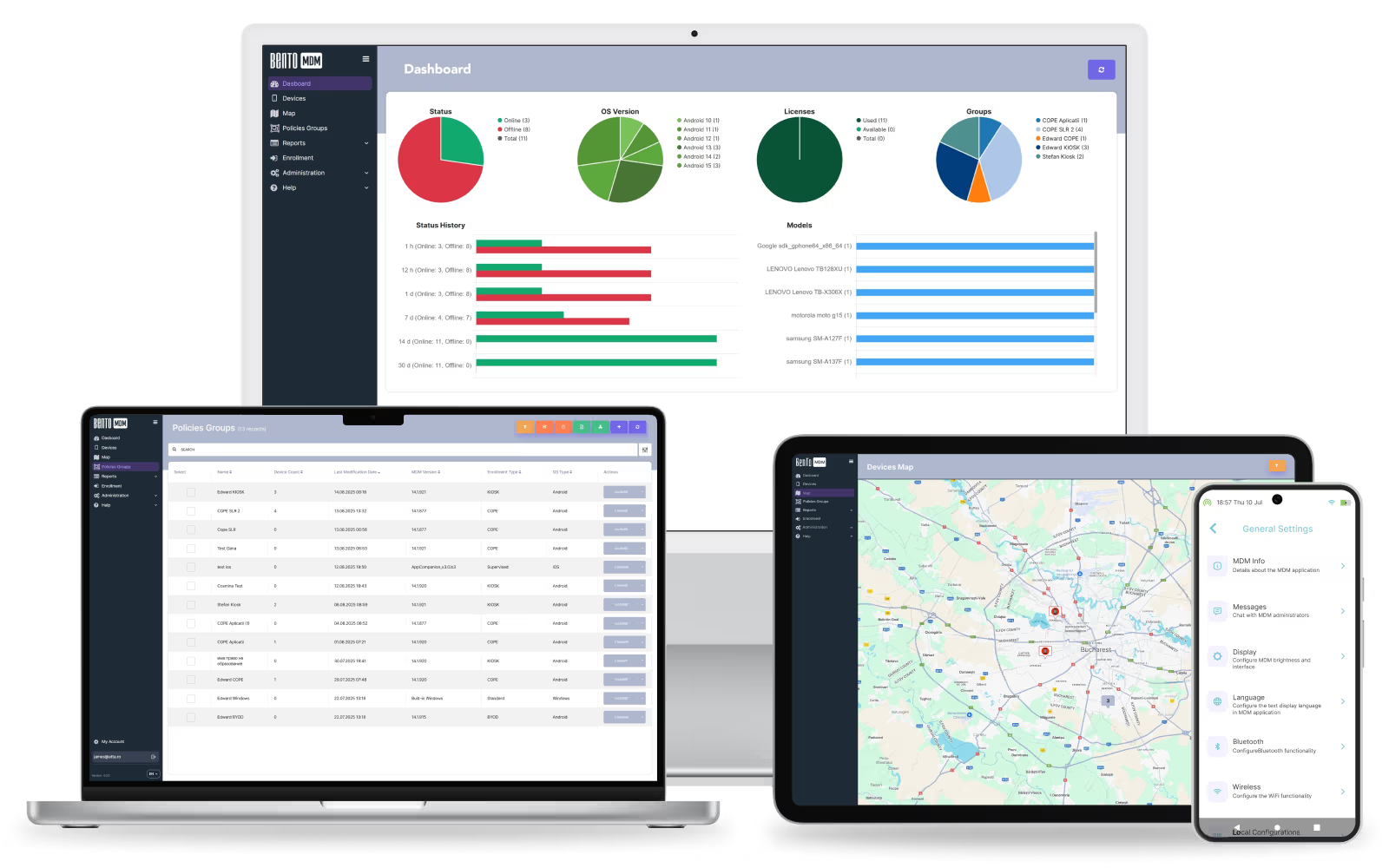
The internationalisation strategy focuses in the first phase on the Mobile Device Management (MDM) solution, which is easier to implement, with a lower unit price and an implementation cycle of a few days. The Field Service Management solution, which is more complex, targets large-scale projects, of the order of millions or tens of millions of euros, in various countries.
Bento's portfolio numbers approximately 100 active clients. Scarlat compared the structure to an investment portfolio: there are a few large clients with a significant share, but also considerable diversification. The share of the top 5 or top 10 clients in turnover is published in the annual report.
At current visibility, Bento does not intend to resort to external financing in the first half of 2026. The company is, however, pursuing a future European funds programme, similar to the one previously accessed, where prior experience offers a scoring advantage.
Regarding shareholder remuneration, Scarlat considers that share buybacks are a better option than dividends, mentioning that the option of running a buyback programme remains open, without a defined decision deadline. The previous buyback programme was executed at a price of 12.6 lei per share.
Scarlat noted a favourable change in the IT labour market: many large companies have reduced outsourcing from Romania, which has made quality specialists available. The pressure on wage increases, although present, is significantly lower than in previous years – an important operational advantage for Bento.
The main risks identified by Scarlat for 2026 are external in nature: the blocking of decision and procurement processes due to macroeconomic or political factors. Internally, management does not see significant risks. The teams have had, and continue to have, a workload, and the fear that software development in 2026 could become useless is unjustified.
The revenue and expenditure budget for 2026 will be published in approximately two to three weeks. Scarlat did not offer any indication about the budgeted figures, but subtly suggested that investors should not benchmark their expectations against a "normal" growth rate versus 2025, but should look "further ahead" – a hint that the budget could reflect a significant leap, supported by the contracts already signed and those in the pipeline.
From a technical analysis perspective, the BENTO share has come out of a short-term downtrend, with a low identified at 7 lei. The 7.8 lei zone is a critical level: a breakout and stabilisation above this threshold would open the way towards 10 lei, without major technical obstacles. The important resistance remains at 12.6 lei – the level at which the previous buyback programme was executed.
The interview at Feel the Market outlined a picture in which Bento is going through a transition period from a weaker 2025 (affected by contracting delays) towards a 2026 with significant growth potential. The major contracts in the energy sector, the pipeline of public and private procurement, internationalisation and the growing share of proprietary products are the main catalysts. The publication of the budget in the coming weeks will be the moment when investors will be able to concretely assess the scale of this growth.
This article is produced for informational purposes, based on the public statements of Bento's representatives during the Feel the Market show. It does not constitute an investment recommendation. Investors are advised to do their own analysis before making investment decisions.
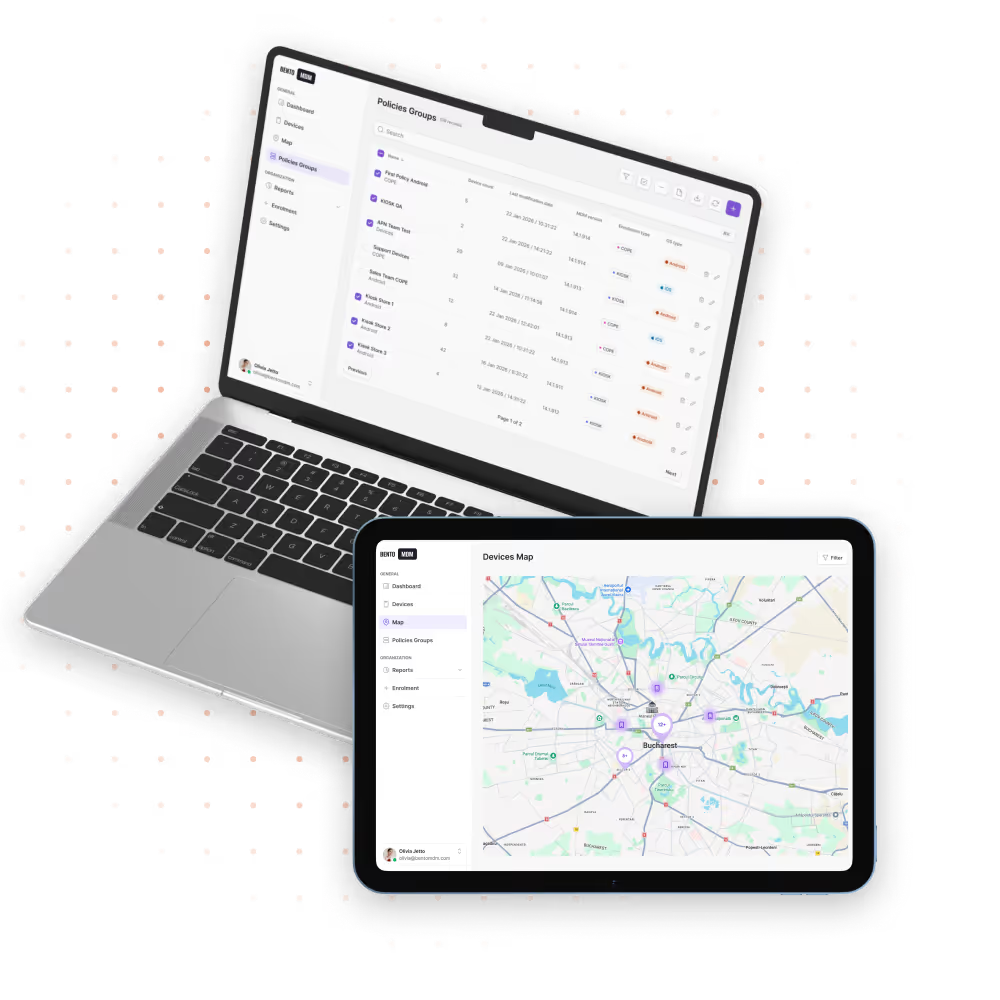
From BYOD to kiosk lockdown, Bento MDM secures and simplifies your device operations. Try it for free or book a live demo.


By Features
By Business Initiative
By OS Support